By Deborah Banish
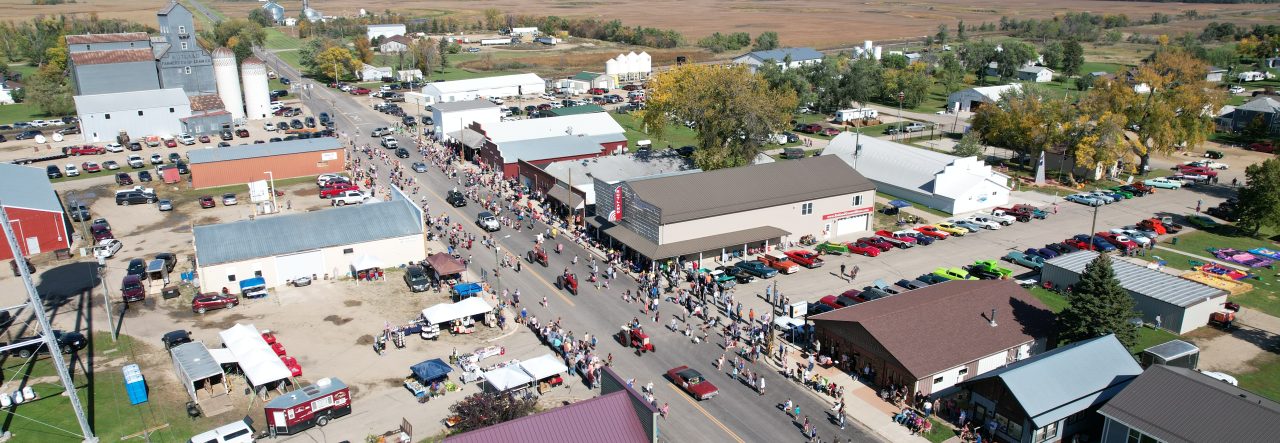
On Friday, March 29, representatives from the Main Street Initiative visited Rutland to meet with community leaders. The Main Street Initiative seeks to create healthy, vibrant communities to attract the talent needed to support growing businesses. The Initiative is built on three pillars: (1) healthy, vibrant communities; (2) a 21st Century workforce; and, (3) smart, efficient infrastructure. The goal is to give local leaders a direct access point to a variety of resources, helping capitalize on strengths and make sound planning decisions. Two representatives from the Department of Commerce toured Rutland to see first-hand the existing businesses, homes and infrastructure in the City before meeting with the community leaders. Representatives from the ND Game & Fish Department, USDA Rural Development, Lake Agassiz Regional Council and the Sargent County Teller attended the hour-long discussion. The turnout was small but that led to a robust and honest conversation that focused on Rutland’s strong sense of community, involvement of City and rural residents to help Rutland provide events and activities that draw people to town. Tim Phelan, ND Game and Fish, noted that the change in agriculture has impacted many communities. Farmers now have semis to haul grain, so they do not make as many trips into town and schools have consolidated in many communities so not every town has a school and café or a grain elevator. This is a challenge. Hunting only provides seasonal support and that also depends on the area wildlife. The group discussed the need in Rutland for more single-family homes, a café and child care. Katie McLaen, Rutland Community Club President, noted that there are many families with young children who may be able to support a childcare facility if one was in Rutland. She noted that Rutland has lower-cost homes that are more economical to purchase than to build a new home. Emily Brown, Dept. of Commerce, said there are funding possibilities including grants and loan programs for childcare centers. Shawn Kessel, Deputy Commissioner, Dept. of Commerce, informed the group that the State collects a 5% tax on Amazon sales. He suggested the City, as a Home Rule City, implement a sales tax to capture similar sales. The City could also implement a lodging and hospitality tax as another revenue-generating source. Rutland would be eligible for the Renaissance Zone program and funding; that requires Zoning Ordinances and a Comprehensive Plan as a start. City Auditor Deborah Banish stated that the City updated both of those documents in 2018; the next step is to prepare the Renaissance Zone paperwork and submit that to the State. Amber Metz, Lake Agassiz, suggested a community-owned café to start meals. Residents would need to commit to eating at a café twice weekly to sustain the business. Discussion focused on funding opportunities and community needs and it was a very informative exchange of information and ideas. The Main Street Initiative representatives will return later this year to help put together a Main Street Initiative plan for Rutland.
Continue reading “Hens Do Crow – April 5, 2019” rutlandramblings