Category: Life In General
50 Interesting Facts About North Dakota
Every State has a lot of fun facts and history. The following North Dakota list should be of interest because Rutland made it in the top three!
- 1. At 3.2%, North Dakota has the lowest unemployment rate in the United States.c
- In 2012, North Dakota was the fastest-growing state in the United States. The growth was largely due to an oil boom in the Bakken fields in the western part of the state. The state became the 2nd-highest oil-producing state behind Texas. Despite its oil boom, agriculture or farming is still North Dakota’s top industry.m

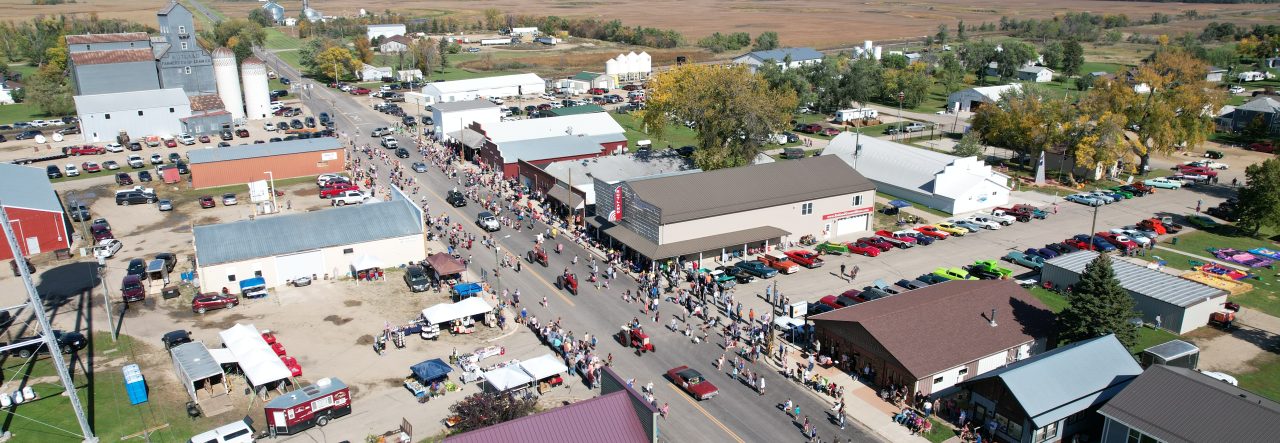
- The world’s largest hamburger was eaten in Rutland, North Dakota. It weighed 3,591 pounds and more than 8,000 people were invited to the meal.i
- Most of the pasta in America is made from North Dakota durum wheat. Grand Forks holds a huge pasta party each year in honor of the crop.n
- In 2012, North Dakota was ranked as the best-run state in the country.l
- It’s illegal to go dancing in Fargo with a hat on. It is even illegal to wear a hat at a party where other people are dancing. It is also illegal in North Dakota to take a nap with your shoes on. After 11 pm, it is illegal to set off fireworks at Devils Lake in North Dakota.n
- The smallest city in North Dakota is Maza, with a population of 5 people. North Dakota does not have towns or villages. Each place is officially a city, no matter how small it is.n
- North Dakota is the least-visited state in America.h
- Lying just under the surface of western North Dakota is about 25 billion tons of lignite, enough to supply the region’s coal needs for over 800 years.n
- Dakota is the Sioux word for “friend” or “ally.”n
- Famous people from North Dakota include musician and bandleader Lawrence Welk, baseball legend Roger Maris, news reporter and commentator Eric Sevareid, author Louis L’Amour, singer Peggy Lee, actress Angie Dickenson, and actor Josh Duhamel.i
- In 2008, Fargo, North Dakota, hosted the largest pancake feed in the world.i
- In 1987, North Dakota passed a bill making English the official state language.i
- North Dakota is the only state in the country with a state-owned bank, the Bank of North Dakota. It also has a state-owned flour mill.i
- Lewis and Clark spent more time in North Dakota than in any other place they visited on their expedition.n
- By 2000, 99.5% of North Dakota’s original grassland had been turned into farms and ranches.i
- Huge herds of bison once roamed the plains of North Dakota. By 1900, fewer than 600 were left. President Roosevelt spearheaded efforts to save the bison, and today about 90,000 live in North Dakota. True buffalo are found only in Asia and Europe. Early European settlers thought bison looked like buffalo and, hence, confused the names.n
- In 1995 the square dance became North Dakota’s official American folk dance. Square dancing combines elements of various European dances, including the quadrille of France.n
- North Dakota holds the Guinness World Record for the most snow angels made simultaneously in one place. On February 17, 2007, 8,962 people made snow angels at the state capitol grounds. They beat the earlier record of 3,784 set at Michigan Technological University the previous year.j
- North Dakota farmland would cover over 12 million city blocks. Farmers there produce enough wheat each year to make 12.6 billion loaves of bread.n
- North Dakota has the highest percentage of church-going population in the country. It also has more churches per capita than any other state.f
- North Dakota ranchers produce enough beef to make 113 million hamburgers each year. There are approximately three times more cattle than people in North Dakota and Angus is the most popular variety of cow.
- North Dakota’s Jamestown, also known as Buffalo City, houses the “World’s Largest Buffalo.” The statue is 26 feet tall, 46 feet long, and weighs 60 tons. A herd of bison graze below the statue, including a rare albino named Mahpiya Ska, Lakota for “White Cloud.”k
- North Dakota’s state capitol is 242 feet high. It is the tallest building in North Dakota and the 3rd-tallest capitol in the country. The original capitol burned to the ground on December 28, 1930.k
- North Dakota produces enough canola oil every year to fill the state capitol’s 19-story tower 19 times.k
- North Dakota is the 19th-largest state in the United States. However, it is the 3rd-least populous and the 4th-least densely populated state in the U.S.k
- Comedian Red Skeleton once quipped that North Dakota is the “the only place I’ve been where I didn’t have to look up to see the sky.”k
- North Dakota became the 39th state in 1889. It was admitted the same day as South Dakota. Because both states wanted to be the first state admitted, President Benjamin Harrison shuffled both statehood papers and signed them without knowing which one was first. However, because North Dakaota is alphabetically before South Dakota, its proclamation was published first.n
- Less than 1% of North Dakota is forest, the smallest amount of any state.i
- Rhode Island, the smallest state in the US, could fit inside North Dakota 46 times.i
- Temperatures drop below 0° F on average of 65 days a year near the Canadian border and 35 days a year in the southwestern part of the state, making it one of the coldest states in the nation. The western parts of both Dakotas are also the windiest area of the United States.i
- Between 1950-2004, an average of 21 tornadoes a year hit North Dakota. In 1999 alone, 65 tornadoes ripped through the state. North Dakota’s deadliest tornado had winds of more than 300 mph (483 kph) in 1957. It struck Fargo, killing 10 people and injuring 103.i
- French Canadian explorer Pierre Gaultier de La Vérendrye led the first group of Europeans to explore what is now North Dakota.n
- North Dakota is the nation’s 3rd-top sugar producer.i
- In 1887, North Dakotan David Henderson Houston invented a camera. He named it by scrambling the first four letters of Dakota and adding a “K” to make Kodak. He later sold the rights of the Kodak camera to George Eastman.k
- North Dakota has had several nicknames, including Flickertail State, Roughrider State, and Peace Garden State.k
- Rugby, North Dakota, claims that it is the geographical center of North America. However, experts say the true center is closer to Balta, which is 15 miles southwest of Rugby.k
- Movies filmed in North Dakota including Dakota (1945), Fargo (1995), and the documentary My Father’s Garden (1996). None of the scenes in the popular movieFargo was filmed there. Additionally, the movie was loosely based on two true events that happened in Minnesota, not North Dakota. But the wood chipper used in the movie is now on display at the Fargo-Moorhead Visitor Center.d,e
- North Dakota is the home to the largest state-owned sheep research center in the United States.i
- North Dakota produces more honey than any other state.n
- The state that grows the most sunflowers is North Dakota.k
- North Dakota has only one abortion clinic and has been rated as the worst state in the country for women.a
- North Dakota has more national wildlife refuges (62) than any other state.n
- North Dakota has long, harsh winters and short, hot summers. Both of its recorded weather extremes occurred in 1936: -60° F in February and 121° F in July.n
- One of the quirkiest sports in North Dakota is lawn mower racing. By the time mowers are customized, they can reach speeds of 60 mph, compared to the 5 mph they might do in the backyard.i
- The J.R. Simplot potato processing plant in Grand Forks, ND, produces over 400 million pounds of French fries per year. McDonald’s is its main customers.i
- Quirky city and place names in North Dakota include Antler, Buttzville, Cannon Ball, Concrete, Flasher, Medicine Hole, On-a-Slant Village, Ops, Three V Crossing, and Zap.o
- The most popular tourist spot in North Dakota is the Wild West town of Medora, which was founded in 1883 by the Marquis de Mores, a French nobleman. According to the 2010 census, its population is 112 people.n
- In 2010, scientists discovered that 80% of the 406 road-side plants they collected in North Dakota showed evidence of genetic modification. Scientists note that the proper monitoring and control of genetically modified crops in the United States is severely lacking and that the escape of genetically modified crops is “unprecedented.”b
- A North Dakotan highway sculpture named “Geese in Flight” holds the Guinness World Record as the largest metal sculpture in the world. Erected in 2001, it is 156 feet long, 100 feet tall, and weighs 75 tons. Retired schoolteacher Gary Greff, who wanted to break up the tedium on the highway, constructed it.n
References and more fun facts about North Dakota can be found at the website http://facts.randomhistory.com/north-dakota-facts.html
Fix My Mail!
Fix My Mail: How is Your Postal Service Working For You?
Fix My Mail is a grassroots effort to hear stories from North Dakotans who have encountered delayed mail delivery times or are dealing with other problems with the U.S. Postal Service (USPS). Senator Heitkamp has heard too many concerns from North Dakotans about the problems they face getting their mail on time, and it absolutely needs to be fixed. So let’s talk about it. When you click the link above, you will be directed to Heidi Heitkamp’s Senate Page where you can fill out a form about mail service. OK Rutland residents, now is your chance to be heard (again). We will not go down without a fight!!!
Thanks to Bill Anderson to alerting us to this opportunity for input. You can also go on Facebook or Twitter and use #FixMyMail to tell your story. And please encourage others you know who have faced problems with their mail service and standards to join the effort.
Rutland in 2013
2013 was another year of “Hello” and “Goodbye”, fun and excitement. Here is a brief summary of events in Rutland, ND from 2013:
We said our goodbyes to:
- Verna Kiefer of Cayuga, passed away in January at the age of 91.
- Roman Weber, passed away in February in Fargo at the age of 77.
- Earl Cramton passed away February 2 in Rutland. He was 64 years old.
- Donald Markeseth of Tewaukon Township, died March 16.
- Ella Lou (Baumer) Nelson passed away in Forman, April 10.
- Woodrow Leonard Olson departed this life April 15, 2013, at Bristol, South Dakota
- Rutland native Valrae (Thomas) Miller passed away April 27, 2013 in Sioux Falls, SD
- Harry A. Kiefer of Cayuga, passed away in Fargo June 1.
- Rutland native Kimberly “Kim” G. Sjothun died June 2, in Fargo.
- August 22, Rutland native Neal Preble departed this life in Grand Forks ND.
- September 12, Loretta M. “Lolly” Arneson passed away in Fargo.
- Joyce (Colby/Butler) Narum passed away September 19, in Fergus Falls MN.
- Rutland native Marvin Evenson, died September 28, in Sioux Falls SD, 101 years old.
- October 6, Borghild (Christianson) Lee passed away in Forman
- November 27, Rutland native Ellis Sundlie passed away at his home in Pahrump NV.
- Clarence J. “Butch” Harff passed away on November 29, 2013, in Forman.
We welcomed new Rutland residents: Continue reading “Rutland in 2013”
Welcome to the Windy City
We may not be in Chicago but Rutland sure can give that city some competition. The winds are blowing across the plains today and gusting heavily to who knows how fast (45 mph was predicted). I know it is extremely windy when the corn chaff blows off the field and piles up around the shelter belt; when the cats outdoor ‘kennel’ tucked by the house surrounded by a shrub, steps and a large storage container blows 100+ yards away and is in pieces in the shelter belt to the North and other parts headed South; when kids toys and trucks, once stacked neatly under the play set, are out to the road; and when the basketball hoop, with a base heavily loaded with sand and rocks, rolls down the driveway (one that takes two+ people to move from its place). Thankfully, this windy March day, is void of snow or no one would be venturing out.
“Owl: This is just a mild spring zephyr compared to the big wind of ’67. Or was it, uh, ’76? Oh, well, no matter. Oh, I remember the big blow well.” Winnie the Pooh and The Blustery Day. 1968.
Balance the Budget — But Not Like This
By Pam Gulleson
Somewhere along the line, our leaders lost their commitment to shared prosperity and financial responsibility and became more concerned with looking out for millionaires than standing up for the middle class.
Nowhere is this clearer than in the budget plan recently outlined by House Budget Committee Chairman Rep. Paul Ryan, R-Wis.
Like Ryan, I believe that reducing our debt needs to be a priority.
But unlike Ryan, I don’t believe we’ll get there by putting the burden on the backs of middle-class families, farmers, veterans and seniors.
The scheme that Ryan is proposing — and that Rep. Rick Berg, R-N.D., has supported — would end the Medicare guarantee.
That would shift substantial costs onto seniors, increase costs to the state and reduce access to quality care.
Ryan’s budget would give the wealthiest few Americans an average tax cut of at least $150,000 while cutting Medicare spending by an estimated $5,900 per senior citizen.
For North Dakota, a state with more than 100,000 residents on Medicare and a senior population expected to grow by 58 percent over the next 20 years, that’s unacceptable.
The plan also calls for $30 billion in cuts to farm and crop insurance and would turn the food stamp program into a block grant with a limit on funding.
Those provisions all but guarantee that there will be no farm bill this year.
For our state, which got about $1.5 billion in crop insurance indemnity payments in 2011, Ryan’s budget signals disaster for North Dakota agriculture.
Where would the farmers whose crops failed last year be without those payments?
Education — the basis of our nation’s upward mobility — would also be on the chopping block.
The plan would implement $115 billion in cuts to the Department of Education, and 9.6 million students would see their Pell Grants fall by more than $1,000 in 2014.
Currently, more than 30 percent of North Dakota college students get Pell Grants to help pay for their education.
At some North Dakota universities, that number is as high as 62 percent.
Without the funding, these students would not have access to the education they need to be able to compete in a global economy.
Furthermore, at a time when veterans who have selflessly served our country have just returned from Afghanistan and Iraq, the budget plan would cut $11 billion from veterans spending and make across-the-board spending freezes and cuts.
These veterans, many of whom rely on Veterans Affairs services, deserve better.
Not only is the Ryan budget unfair, it’s simply bad policy.
The middle class will be forced to shoulder an increasing burden, which will derail economic growth and development.
Cuts to agriculture, Medicare, education and veterans are not what our nation needs to build the future.
I’ve opposed this measure from the start, and I call on my opponents in the race for U.S. House to stand with me.
It’s time to stand up for what’s best for North Dakota.
—————-
A former North Dakota state representative, Pam Gulleson is the state Democratic-NPL-endorsed candidate for U.S. House and a Rutland resident.